Design strategy
Payment enhancements and integration
Design strategy
Payment enhancements and integration
Design strategy
Payment enhancements and integration

What is the goal?
The main objective was to enhance the payment process by implementing key feature upgrades.
Key initiatives include streamlining the checkout flow to reduce abandonment.
Integrate localized payment methods (like digital wallets) so that providers (the client) can reach more users and process payments.
The main objective was to enhance the payment process by implementing key feature upgrades.
Key initiatives include streamlining the checkout flow to reduce abandonment.
Integrate localized payment methods (like digital wallets) so that providers (the client) can reach more users and process payments.
Understanding our user personas
I started by analyzing our user personas. Because our business model clearly defined these roles, I already had a solid foundation of insights to work from.
Persona 1
(The Payee/Patient)
Obstacle: Cannot use digital portals that require standard card entry or "Save-on-File" features.
Obstacle: Outdated payment methods
Obstacle: Clinic only accepts a single form of payment—standard bank-issued debit cards—due to the limitations of his basic processing software.
Persona 2
(The Provider)
Obstacle: Cannot process cash, mobile wallets, or non-traditional prepaid cards.
Obstacle: To keep administrative costs low by sticking to one rigid, automated system.
Obstacle: Small clinic owner with basic, outdated billing software.
I started by analyzing our user personas. Because our business model clearly defined these roles, I already had a solid foundation of insights to work from.
Persona 1
(The Payee/Patient)
Obstacle: Cannot use digital portals that require standard card entry or "Save-on-File" features.
Obstacle: Outdated payment methods
Obstacle: Clinic only accepts a single form of payment—standard bank-issued debit cards—due to the limitations of his basic processing software.
Persona 2
(The Provider)
Obstacle: Cannot process cash, mobile wallets, or non-traditional prepaid cards.
Obstacle: To keep administrative costs low by sticking to one rigid, automated system.
Obstacle: Small clinic owner with basic, outdated billing software.
Research & Discovery
Our discovery phase revealed that the legacy web architecture couldn't support modern payment integrations. To meet our primary objectives and ensure a seamless transaction experience, we pivoted to a mobile-first design strategy.
Due diligence: Before design and writing code we established legal standing as a merchant to support 3 major payment gateways.
Merchant Account: PayPal, ApplePay and CareCredit.
0%
0%
PayPal is the prefered adoption for payments by 42% of Americans.
0%
0%
Apple Pay: Used by 34% of U.S. consumers
0%
0%
CareCredit is accepted at over 285,000 provider locations
Our discovery phase revealed that the legacy web architecture couldn't support modern payment integrations. To meet our primary objectives and ensure a seamless transaction experience, we pivoted to a mobile-first design strategy.
Due diligence: Before design and writing code we established legal standing as a merchant to support 3 major payment gateways.
Merchant Account: PayPal, ApplePay and CareCredit.
0%
0%
PayPal is the prefered adoption for payments by 42% of Americans.
0%
0%
Apple Pay: Used by 34% of U.S. consumers
0%
0%
CareCredit is accepted at over 285,000 provider locations
Delivery and timeline
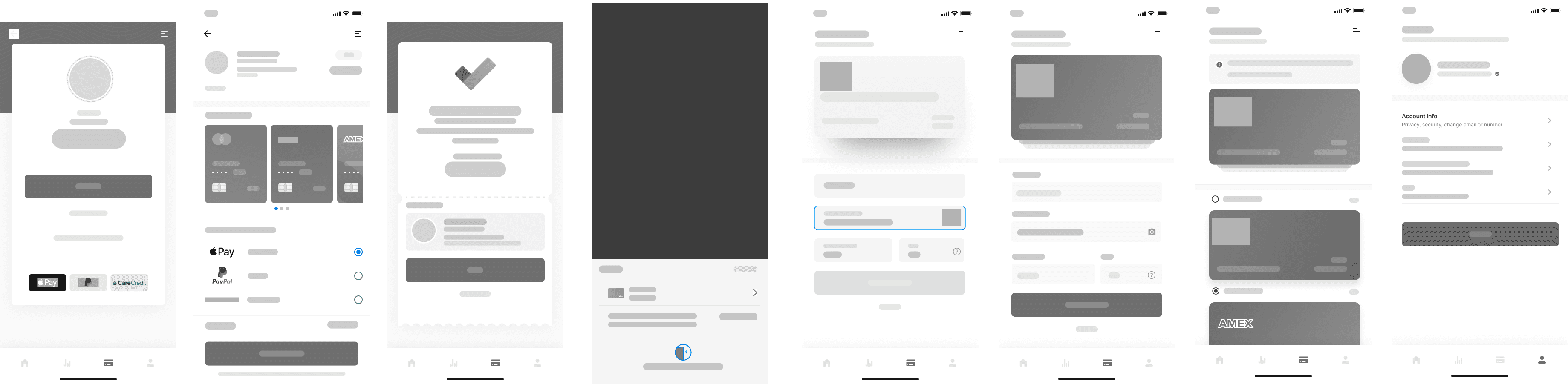
To meet our aggressive MVP launch window, we adopted a Lean UX methodology. This allowed us to prioritize core functional delivery while maintaining a high-velocity feedback loop. By streamlining certain design artifacts, our core team—comprising a Product Owner, UX Designer, Scrum Master, and Engineering—focused exclusively on high-impact user flows to ensure an on-time, strategic release.
Task Flows: Map only the "Happy Path" (the ideal user journey).
Wireflows: Combine basic wireframes with connector arrows to show movement without a separate map.
Agile prioritization
As a team we focused on collaboration, focusing on working features in short cycles, frequent user testing, and evidence-based decisions. As lead designer I often worked one sprint ahead to prepare validated designs for developers. We kept documentation light and used artifacts like user stories, prototypes, and usability results. The aim was to reduce waste, make small bets, and learn fast. This keeps everyone aligned around measurable user outcomes rather than rigid plans.
To meet our aggressive MVP launch window, we adopted a Lean UX methodology. This allowed us to prioritize core functional delivery while maintaining a high-velocity feedback loop. By streamlining certain design artifacts, our core team—comprising a Product Owner, UX Designer, Scrum Master, and Engineering—focused exclusively on high-impact user flows to ensure an on-time, strategic release.
Task Flows: Map only the "Happy Path" (the ideal user journey).
Wireflows: Combine basic wireframes with connector arrows to show movement without a separate map.
Agile prioritization
As a team we focused on collaboration, focusing on working features in short cycles, frequent user testing, and evidence-based decisions. As lead designer I often worked one sprint ahead to prepare validated designs for developers. We kept documentation light and used artifacts like user stories, prototypes, and usability results. The aim was to reduce waste, make small bets, and learn fast. This keeps everyone aligned around measurable user outcomes rather than rigid plans.
To meet our aggressive MVP launch window, we adopted a Lean UX methodology. This allowed us to prioritize core functional delivery while maintaining a high-velocity feedback loop. By streamlining certain design artifacts, our core team—comprising a Product Owner, UX Designer, Scrum Master, and Engineering—focused exclusively on high-impact user flows to ensure an on-time, strategic release.
Task Flows: Map only the "Happy Path" (the ideal user journey).
Wireflows: Combine basic wireframes with connector arrows to show movement without a separate map.
As a team we focused on collaboration, focusing on working features in short cycles, frequent user testing, and evidence-based decisions. As lead designer I often worked one sprint ahead to prepare validated designs for developers. We kept documentation light and used artifacts like user stories, prototypes, and usability results. The aim was to reduce waste, make small bets, and learn fast. This keeps everyone aligned around measurable user outcomes rather than rigid plans.
Design, test & build
The initial designs went through several user tests, discussions with operations, marketing and business teams to ensure we have a friendly and scalable user experience. I wish I could show you every single part of the process!
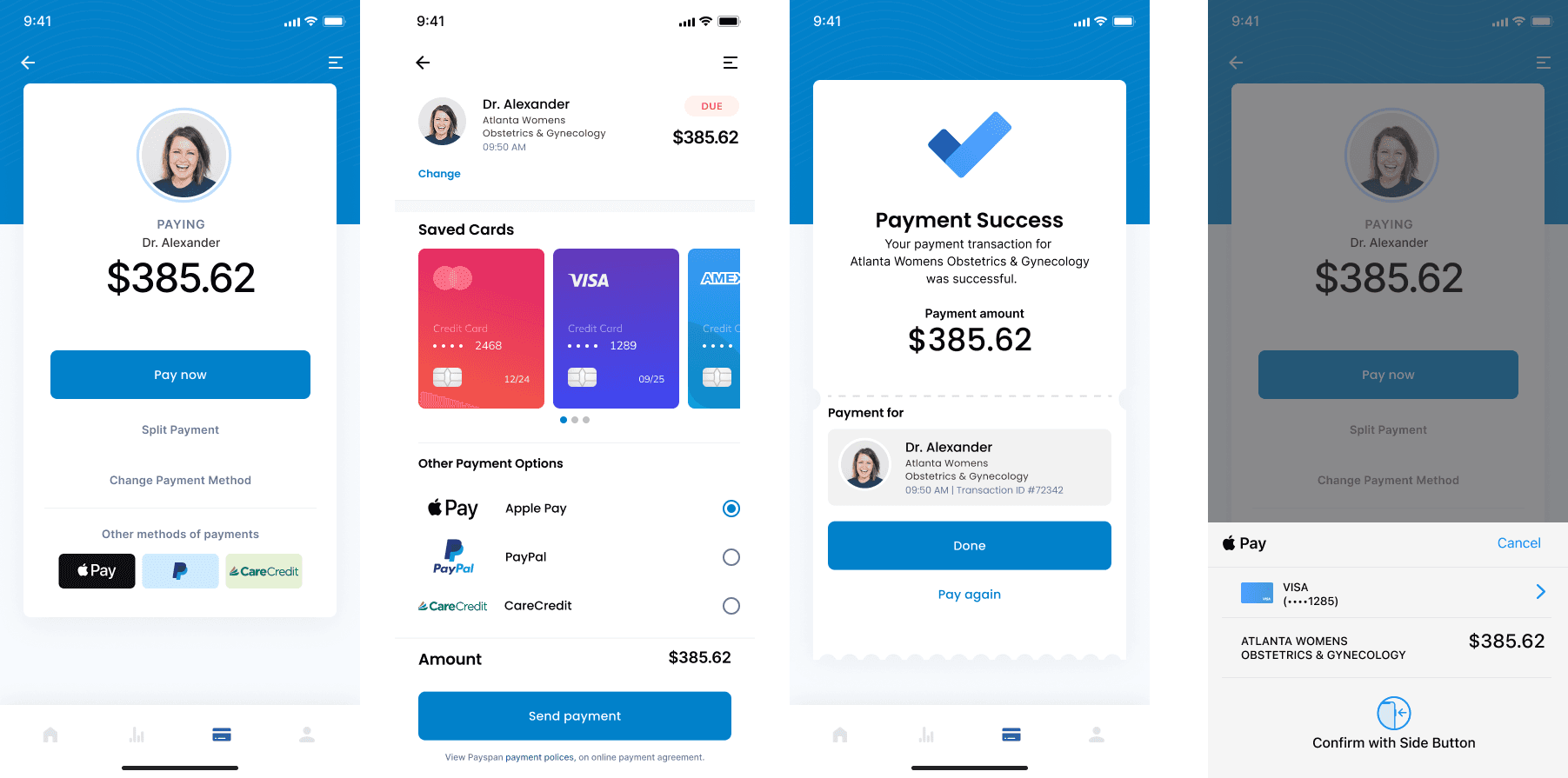
The initial designs went through several user tests, discussions with operations, marketing and business teams to ensure we have a friendly and scalable user experience. I wish I could show you every single part of the process!